https://ift.tt/eA8V8J
Pictures of the Hyundai Bayon
from Sitewide RSS feed https://ift.tt/3kCStpL
Tuesday, March 2, 2021

Volvo to go all-electric by 2030 with new small EV planned
https://ift.tt/eA8V8J
from Sitewide RSS feed https://ift.tt/3bYk1lM
Volvo has announced that it will offer only electric cars by 2030 - and that it will push its sales of EVs into online transactions instead of conventional dealerships.
The Swedish brand hit the headlines back in 2017 when it became the first major manufacturer to say it had a plan to no longer sell cars powered by combustion engines. That announcement was made in 2019, and Volvo is now focusing on achieving half of its sales volumes with pure-electric models by 2025.
But in a statement released this morning, Volvo says it now expects to phase out any models containing a combustion engine at all - plug-in hybrids, in effect - by the end of this decade. Volvo says the decision “builds on the expectation that legislation as well as a rapid expansion of accessible high-quality charging infrastructure will accelerate consumer acceptance of fully electric cars”.
- SEE MORE Best electric SUVs to buy now
Volvo’s plan follows a number of significant brands committing to an all-electric future within the next 10 years. Ford announced last month that it all of its sales in Europe will be electric only by 2030, while the Jaguar nameplate will switch to EVs even earlier, by 2025.
“To remain successful, we need profitable growth,” Volvo CEO Hakan Samuelsson said. “So instead of investing in a shrinking business, we choose to invest in the future - electric and online. We are fully focused on becoming a leader in the fast-growing premium electric segment.”
Volvo ‘XC20’ on the way
Volvo will reveal its second pure-electric car, a new 40-series model, later today. Samuelsson confirmed to Auto Express last year that it is also working on a smaller EV, potentially to be badged XC20 and based on the new SEA platform developed by Volvo’s owner Geely. A top-down teaser image, released by the company and labelled ”mid-decade electric portfolio” includes a car that’s similar in size to the current XC40, but also a slightly smaller model. It’s the first official glimpse of the baby EV.
The push to all-electric cars will take place solely online, Volvo has also announced - as these zero-emissions models available only through digital sales, alongside the firm’s existing Care by Volvo subscription offering. Volvo’s head of global commercial operations, Lex Kerssemakers, said, “We want to offer our customers peace of mind and a care-free way of having a Volvo, by taking away complexity while getting and driving the car. Simplification and convenience are key to everything we do.”
Volvo says that it will involve its dealers in the push towards online, saying they will “remain a crucial part of the customer experience and continue to be responsible for a variety of important services, such as preparing, delivering and servicing cars”.
Now read our review of the all-electric Volvo XC40 Recharge...
from Sitewide RSS feed https://ift.tt/3bYk1lM
Monday, March 1, 2021
Mazda launches updated e-Skyactiv X powertrain
https://ift.tt/eA8V8J
from Sitewide RSS feed https://ift.tt/381N1b4
Mazda has updated its 2.0-litre four-cylinder mild-hybrid Skyactiv-X petrol engine, adding a little more power allied with a handful of new efficiency tweaks.
Buyers can opt for the new revised e-Skyactiv X powertrain in the CX-30 crossover now, with prices starting from £26,300. The updated Mazda3 will be available to order from April, although prices are yet to be confirmed.
Upgrades for the e-Skyactiv X engine include modified pistons, a reflashed ECU, a slightly higher compression ratio and revised intake valve timing. The result is an extra 6bhp and 16Nm of torque, bumping up the unit’s maximum output to 183bhp and 240Nm.
The 2.0-litre engine’s belt-driven starter generator also features new software which increases responsiveness and enables smoother power delivery.
As well as the extra power, Mazda says its revisions have made the e-Skyactiv X engine more efficient than its predecessor. For example, the four-wheel drive CX-30 GT Sport emits 11g/km less CO2 than before, with a 2.4mpg improvement in fuel economy.
Mazda also says that, depending on specification, CO2 emissions for the range-topping e-Skyactiv X engine have dropped by between five and 11g/km across the Mazda3 and CX-30 line-ups. Like the old model, buyers will also have their choice of either a manual or automatic gearbox and either front- or four-wheel drive.
The CX-30 is offered in a choice of four trim-levels – SE-L Lux, Sport Lux, GT Sport and GT Sport Tech. Standard equipment for the base-model includes 16-inch alloy wheels, LED headlights, a reversing camera, dual zone climate control, a seven-inch digital instrument cluster and an 8.8-inch infotainment system.
Prices for the mid-range CX-30 Sport e-Skyactiv X start from £27,840. Upgrades over the base model include 18-inch alloy wheels, adaptive LED headlights, rear privacy glass and a power-operated tailgate.
The GT Sport e-Skyactiv X starts from £29,600 and adds black leather upholstery, a heated steering wheel and a 12-speaker Bose stereo system. The flagship GT Sport Tech e-Skyactiv X adds a 360-degree camera, front cross traffic alert and a driver monitoring system. Prices start from £30,500.
Mazda’s entry-level 120bhp 2.0-litre Skyactiv-G engine has received a similar range of upgrades, which have dropped its CO2 emissions by 7–8g/km across the Mazda3 and CX-30 line-ups. Mazda has also renamed the unit e-Skyactiv G to match the range-topping engine’s branding.
Now read our review of the Mazda CX-30. Let us know your thoughts in the comments section below…
from Sitewide RSS feed https://ift.tt/381N1b4
New BMW 530d Touring 2021 review - pictures
https://ift.tt/eA8V8J
Pictures of the new BMW 530d Touring
from Sitewide RSS feed https://ift.tt/3sGtaWu
Pictures of the new BMW 530d Touring
from Sitewide RSS feed https://ift.tt/3sGtaWu
Nissan Re-Leaf: the electric car with an emergency power bank - pictures
https://ift.tt/eA8V8J
Pictures of the Nissan Re-Leaf
from Sitewide RSS feed https://ift.tt/3dYomI6
Pictures of the Nissan Re-Leaf
from Sitewide RSS feed https://ift.tt/3dYomI6
'Genesis’s aim is to lure Jaguar Land Rover customers'
https://ift.tt/eA8V8J
from Sitewide RSS feed https://ift.tt/3bTyrDH
Last week Jaguar Land Rover formally announced its “Reimagine” strategy, its renaissance, rightsizing, repurposing, reorganising and rationalising. Its words, not mine. At the same time, Genesis was quietly setting up shop in Britain via its recently formed company, Genesis Motor UK. By Spring, it’s expected to unveil its preliminary product, pricing, and sales and servicing plans.
Genesis hails from South Korea, and is the youngest, newest, most upmarket member of the Hyundai-Kia-Genesis clan. It designs, manufactures and sells globally. The products are handsome, refined, state-of-the-art SUVs and saloons – some
of them multi award-winners.
The firm is too polite to admit it, but Genesis’s aim is to lure some, not all, Land Rover customers. Sure, it knows and accepts that die-hard Defender buyers, for example, are unlikely to defect to Genesis. Badge-obsessed drivers of top-flight Range Rovers will need some convincing too. But those thinking of buying into – or out of – the Evoque, Discovery, Disco Sport or Velar are potentially there for the taking.
More of a target is Jaguar. It must have been music to the ears of Genesis executives last week when they heard incoming JLR CEO Thierry Bollore say that he is effectively killing off the electric XJ, as well as placing question marks over the future of other Jag saloons. The Koreans are big on – and committed to – luxury saloons, and will very happily step in.
Back in 2013 before the firm had a proper car to sell, I visited the Genesis World HQ in the achingly trendy, scarily expensive Gangnam district of Seoul. There, the ambitious top brass were so new to the game they were as keen to hear from me as I was from them how they could possibly come from nowhere to take on and beat the likes of Jag, BMW and Lexus. In that same year I wrote in Auto Express about “establishing Genesis as an upmarket sub-brand, which could sell cars from classy, standalone showrooms” here in Blighty. And my understanding eight years later is that such a dedicated network is now only months away. Just as Lexus outlets are separate from Toyota showrooms, newer and more prestigious Genesis dealerships will be distanced from Hyundai or Kia premises.
Not that Genesis customers (or “connoisseurs” as the company often calls them) will be people who want to return to the workshop often. Thanks to a complimentary service valet and remote diagnostic checks, “you may never set foot in our service centres” is the tempting offer in other parts of the world. Let’s hope buyers here are offered the same.
As a consumer, you should start getting ready for the imminent arrival in the UK of good-looking, tech-laden, high-quality Genesis models such as the GV70, GV80, G70, G80 and G90, plus the Mint concept. Jaguar board members, employees and dealers should be at best bothered, at worst worried. Hyundai is good, Kia even better, but Genesis is in a far superior league. It’s this recently born Korean brand that might seriously disrupt Jaguar’s self-proclaimed plans for a period of “renaissance” and “reimagination”.
Check out the latest on Jaguar's switch to electric here...
from Sitewide RSS feed https://ift.tt/3bTyrDH
New Volkswagen ID.3 convertible could be on the way
https://ift.tt/3bKcUx0
from Sitewide RSS feed https://ift.tt/2NOkv5K
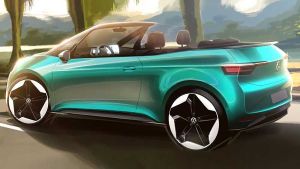
Volkswagen executives could soon give the green light to a convertible version of the ID.3 electric hatchback, after the brand’s CEO, Ralf Brandstätter, released these official renders on social media to preview the new car’s styling.
Brandstätter hasn’t yet confirmed when we’ll see the finished car. For now, all he’s said is that the ID.3 convertible makes for “a very tempting idea,” meaning Volkswagen is likely still gauging public interest before throwing its weight behind the project.
- SEE MORE Best electric cars to buy 2021
If Volkswagen can put the drop-top ID.3 into production before the new Tesla Roadster, it’ll be the first four-seat convertible EV on the market. It’ll also sit in a niche of its own, as its SUV-shaped rivals from Hyundai and Kia don’t lend themselves well to drop-top conversions.
What’s more, MINI has already confirmed that its convertible hatchback won’t see another generation. The petrol model is a particularly slow seller for the brand, which means MINI won’t make the body style available with its electric powertrain, removing another rival for the ID.3 convertible’s path.
Volkswagen’s official renders show the convertible ID.3 will lose its two rear doors as part of the redesign. To make space for the folding fabric soft top, the standard tailgate will also be swapped for a shorter unit, which could hinge downwards like the MINI Convertible’s.
Both of these changes will eat into rear passenger space and the ID.3’s 385 litre boot could be slashed to around 200 litres. However, like the MINI Convertible, we expect buyers will be willing to put up with the limited practicality for the extra style.
Using the MEB platform, the ID.3 convertible would have access to the same electric motors and battery packs as its hatchback sibling. The entry-level Pro model would feature a 58kWh battery and a 143bhp electric motor mounted on the rear wheels.
Like the hardtop, Volkswagen could also offer a Pro Performance variant, which features the same battery pack, but a more powerful 201bhp electric motor. However, the added weight of the drop-top could reduce the EV’s range slightly over the hatchback’s 263-mile maximum.
Would you like to see Volkswagen put the ID.3 convertible into production? Let us know in the comments section below…
from Sitewide RSS feed https://ift.tt/2NOkv5K
Subscribe to:
Posts (Atom)