Tuesday, July 27, 2021

New Bentley Bentayga Hybrid 2021 review

https://ift.tt/2VfPWcu

Verdict

The second-generation Bentley Bentayga Hybrid is one of motoring’s more curious anomalies. It’s still a Marmite car visually, despite a reasonably successful mid-life redesign. But ultimately, it’s also still a 2.7-tonne luxury SUV that is not going to help save the planet, plug-in hybrid system or not. It also lacks character compared with the V8 and W12 models. Nice interior, though.

When the Bentayga first appeared at the end of 2015, the world was a very different place, and 2.7-tonne, petrol-powered SUVs seemed far less out of kilter with it than they do right now.

So in the middle of 2019, before you-know-what began to unfold, Bentley reacted and gave us the Bentayga Hybrid. And now it has reacted again and given us a second-generation model that uses the same powertrain as the original, but which has been redesigned inside and out, just like the rest of the Bentayga range.

It costs £155,000, which is £22,000 more than the first-gen model. But for that you get a new-look interior and exterior, along with a hybrid system that is capable of 81mpg and which emits just 79g/km in EV mode.

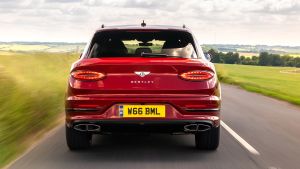
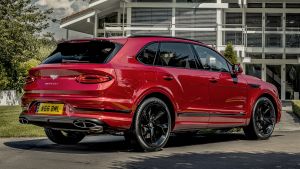
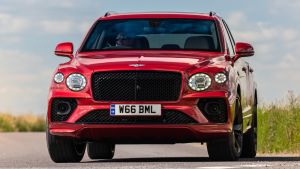
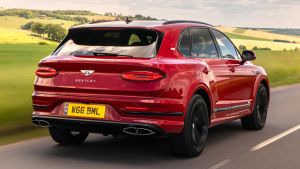
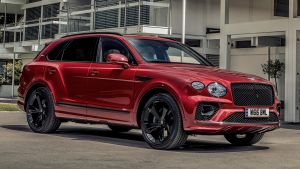
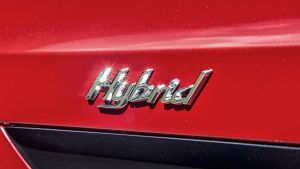
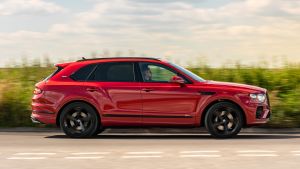
The styling “upgrades” bring the Bentayga more closely in line with the rest of the range, Bentley claims, with a larger and more upright new grille, more subtle tweaks along the flanks that include “Hybrid” badging, and an entirely fresh rear end, complete with new oval tailpipes. Vast 22-inch wheels also become available and a range of new paint options have been added to the already-expansive options list.

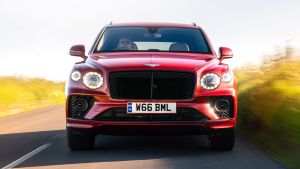
It still looks instantly like a Bentayga, and if anything, it appears even bigger and even more imposing in the flesh. That’s at least partly down to the new grille, but there’s also a pair of huge new LED Matrix headlights that have been designed to look like cut-crystal glassware, says Bentley, adding to the overall effect.
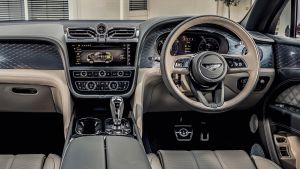
Bentley Bentayga Hybrid - dash
Bentley Bentayga Hybrid - side
Bentley Bentayga Hybrid - full rear
Bentley Bentayga Hybrid - front
Bentley Bentayga Hybrid - rear static
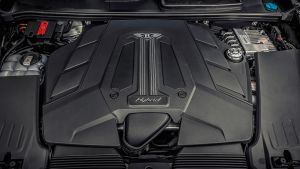
Bentley Bentayga Hybrid - engine
Bentley Bentayga Hybrid - full front
Bentley Bentayga Hybrid - front cornering
Bentley Bentayga Hybrid - charging
Bentley Bentayga Hybrid - rear
Bentley Bentayga Hybrid - interior detail
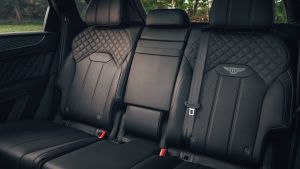
Bentley Bentayga Hybrid - rear seats
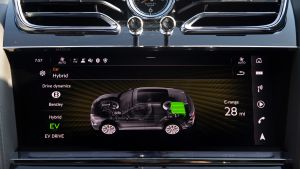
Bentley Bentayga Hybrid - infotainment
Bentley Bentayga Hybrid - front static
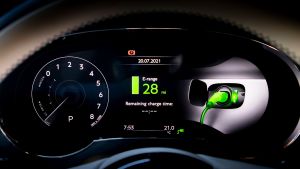
Bentley Bentayga Hybrid - dials
Bentley Bentayga Hybrid - Hybrid badge

Inside, the new TFT instrument display replaces the more traditional dials from before, and in the Hybrid model’s case there are numerous new displays to inform you which mode you’ve selected – EV, Hybrid or Hold. As with the original Hybrid, you can also choose between four different driving modes for the suspension, steering, throttle map and so on.

Bentley says that rear seat and boot space have also been improved in all directions, although the Hybrid remains either a four- or five-seater; the seven-seat option can’t be made available because there’s a 210kg lithium-ion battery packaged beneath the rear seats and boot.

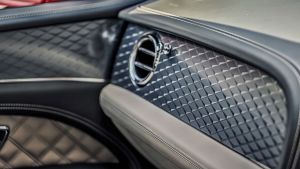
Either way, the cabin is even more luxuriant than before and is even better equipped, with a 10.9-inch touchscreen display for the infotainment system, a new steering wheel and yet higher-quality materials on the seats, console and dash.

The main point of focus for the Hybrid model – its hybrid system – remains unchanged, however. And that is somewhat disappointing, given that a) it wasn’t exactly world-beating in the first place, and b) the rate of technological progress is so fierce among the competition, for obvious reasons, that standing still in this game inevitably means you take one step back.

To recap, the Bentayga Hybrid’s main source of propulsion is a single-turbo 3.0-litre V6 that can also be found in a variety of other, rather less expensive cars within the VW empire. This is mated to 17.3kWh lithium-ion battery and an electric motor that boosts the V6’s outputs from around 340bhp/450Nm to 443bhp and 700Nm combined. This is enough to give a 0-62mph time of 5.5sec and a 158mph top speed, despite the Hybrid model weighing 200kg more than the rest of the range.

Bentley Bentayga Hybrid - dash
Bentley Bentayga Hybrid - side
Bentley Bentayga Hybrid - full rear
Bentley Bentayga Hybrid - front
Bentley Bentayga Hybrid - rear static
Bentley Bentayga Hybrid - engine
Bentley Bentayga Hybrid - full front
Bentley Bentayga Hybrid - front cornering
Bentley Bentayga Hybrid - charging
Bentley Bentayga Hybrid - rear
Bentley Bentayga Hybrid - interior detail
Bentley Bentayga Hybrid - rear seats
Bentley Bentayga Hybrid - infotainment
Bentley Bentayga Hybrid - front static
Bentley Bentayga Hybrid - dials
Bentley Bentayga Hybrid - Hybrid badge

The claimed range on a single 75-litre tank of fuel and with the battery fully charged is 431 miles; the car is capable of 25 miles in full EV mode, during which it can also do 84mph before the petrol engine automatically fires up.

There are three modes; EV, Hybrid and Hold. In EV you use only the battery; in Hybrid the car works out which is the most efficient combination of propulsion, taking into account your driving style and how hard you press the two pedals; and in Hold it works out how to keep as much charge as possible in the battery so that, in town, you can switch to EV mode and still have plenty of charge left.

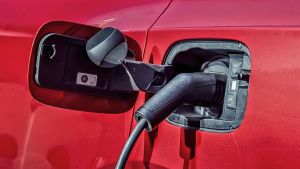
And you’ll need to hang on to all the EV power you can, given that a full recharge takes 2.5 hours from a wallbox or around seven hours from a regular three-pin socket. There is no fast charge capability, in other words, and you can’t drive your Bentayga Hybrid in a way that regenerates power into the battery on the move, either, because it’s too heavy to achieve this and would burn too much fossil fuel in the process to make sense. As plug-in hybrids go, it’s not one of the more cutting-edge examples.

But perhaps the biggest disappointment of all with the Bentayga Hybrid is its lack of personality on the move, its absence of Bentley-ness, and that’s purely down to the fact that it’s powered mainly by a strangely characterless Audi-sourced V6 engine. In many ways it feels far more majestic when wafting along in near silence in full EV mode, not in Hybrid mode. Only then can you fully appreciate the serenity of its ride (so long as the dampers are in Comfort), the accuracy of its steering, the feel and power of its brakes, the pure quality of its new cabin and the space it unquestionably contains – all the elements that distinguish the Bentayga as a world-class luxury SUV, in other words, and which define it as a true Bentley.

As soon as that V6 petrol sparks up, though, too much of that feeling is diluted. And at that point you do wonder if it is really worth £155,000.

Model: Bentley Bentayga Hybrid
Price: £155,500
Engine: 3.0-litre V6, turbo petrol hybrid
Power/torque: 443bhp/700Nm
Transmission: 8-speed dual-clutch auto, four-wheel drive
0-62mph  5.5 seconds
Top speed: 158mph
Economy/CO2: 81mpg/79g/km
On sale: Now


from Sitewide RSS feed https://ift.tt/3fmvLkz

New Bentley Bentayga Hybrid 2021 review - pictures

https://ift.tt/eA8V8J

Pictures of the new Bentley Bentayga Hybrid

from Sitewide RSS feed https://ift.tt/3zGBc5p

Rally-prepped Bowler Defender Challenge car unveiled

https://ift.tt/3yeDxEk

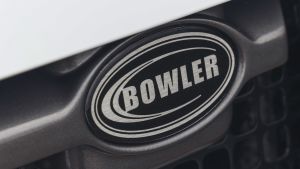
Bowler, builders of specialised rally Land Rovers, has revealed its latest creation - the competition-ready Bowler Defender Challenge.

The new off-road competitor is based on the Land Rover Defender 90, with the standard car modified to improve safety and durability for competition in Bowler’s own one-make championship - and some of the cosmetic parts Bowler has engineered as part of the project could even be sold as aftermarket extras to Defender customers to help upgrade the look of their cars.

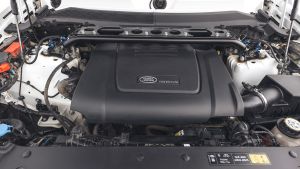
The Challenge car is fitted with Land Rover’s P300 2.0-litre turbocharged four-cylinder Ingenium engine producing 296bhp and 400Nm of torque, driving all four wheels through an eight-speed automatic gearbox. 

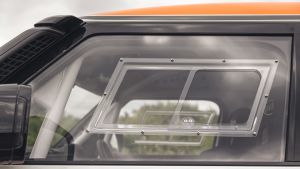
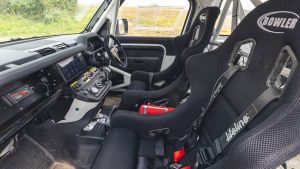
Neither the engine or transmission have been modified to help keep costs down and the package more approachable to novices, but to prepare it for competition the interior is stripped back and an FIA-spec roll cage has been installed for added safety and improved rigidity.

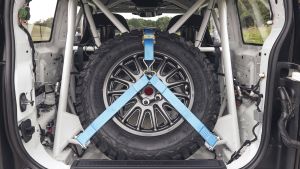
Bowler Defender Challenge - spare wheel
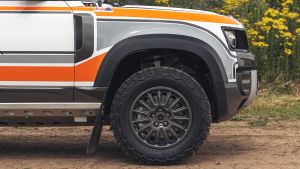
Bowler Defender Challenge - wheel
Bowler Defender Challenge - side
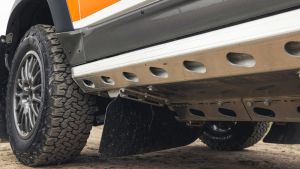
Bowler Defender Challenge - sideskirt
Bowler Defender Challenge - badge
Bowler Defender Challenge - engine
Bowler Defender Challenge - above
Bowler Defender Challenge - dust
Bowler Defender Challenge - rear
Bowler Defender Challenge - front action
Bowler Defender Challenge - window
Bowler Defender Challenge - side action
Bowler Defender Challenge - front static
Bowler Defender Challenge - harness
Bowler Defender Challenge - grille
Bowler Defender Challenge - detail
Bowler Defender Challenge - jump
Bowler Defender Challenge - front
Bowler Defender Challenge - interior
Bowler Defender Challenge - screen

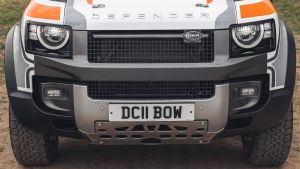
Full-length underbody protection is also fitted, and a redesigned front end allows for improved engine cooling. It’s here that elements of the new front-end design - including the redesigned bumper and grille, along with a new rear spoiler - could be offered as aftermarket extras in the future, according to the company.

The engine does give a fruitier soundtrack thanks to a Bowler sports exhaust system, while stiffened engine and gearbox mounts feature, along with extra chassis bracing to minimize body flex over rough surfaces.

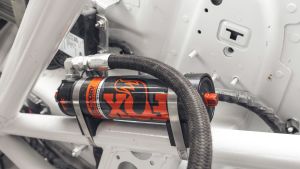
The front and rear suspension subframes have also been strengthened, while the chassis uses bespoke adjustable Fox suspension dampers that raise the ride height by 25mm. The Defender Challenge also rides on rally-spec 18-inch wheels wrapped in all-terrain tyres.

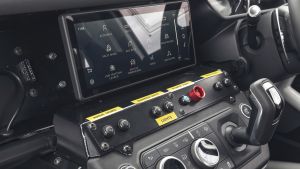
Inside, a raft of new systems have been integrated into the standard car’s electrics, including fire protection, electrical cut-offs and controls for additional exterior race-spec lighting.

Racing bucket seats and a quick-release steering wheel have also been fitted, with the gear selector being repositioned for improved ergonomics. Bowler has also added a column-mounted paddle shift system with a focus on usability in competition.

Bowler Defender Challenge - spare wheel
Bowler Defender Challenge - wheel
Bowler Defender Challenge - side
Bowler Defender Challenge - sideskirt
Bowler Defender Challenge - badge
Bowler Defender Challenge - engine
Bowler Defender Challenge - above
Bowler Defender Challenge - dust
Bowler Defender Challenge - rear
Bowler Defender Challenge - front action
Bowler Defender Challenge - window
Bowler Defender Challenge - side action
Bowler Defender Challenge - front static
Bowler Defender Challenge - harness
Bowler Defender Challenge - grille
Bowler Defender Challenge - detail
Bowler Defender Challenge - jump
Bowler Defender Challenge - front
Bowler Defender Challenge - interior
Bowler Defender Challenge - screen

In1985, Bowler began its long-lasting association with Land Rover, having set about modifying a Series 1 model to go rallying. The project was a considerable success, and Bowler began receiving orders for more competition-spec Land Rovers.

Since then, Bowler has become synonymous with rally-prepped Land Rovers, from the Series 1-based Tomcat to the Range Rover Sport-derived EXR, and the company was acquired by Jaguar Land Rover in 2019, forming part of its Special Vehicle Operations division.

The relationship has gone from strength to strength since and has made this new project possible.

The Bowler Defender Challenge will run as part of a single-maker series for 12 owners, competing over seven UK-based rounds. Each car will be prepared by Bowler, with a full support team and optional driver training for those new to off-road competition. The series commences in March 2022 and aims to cover a wide mix of rally conditions across all seven events.

Prices for the Bowler Defender Challenge start from £99,500, with entry to the 2022 series included in the asking price.

Bowler reveals classic Land Rover Defender 110...


from Sitewide RSS feed https://ift.tt/3zKxFmO

New SsangYong X200 SUV previewed in teaser sketches

https://ift.tt/3eW60XK

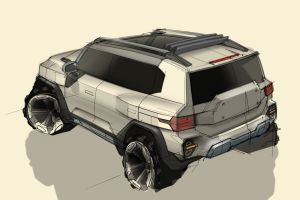
SsangYong has confirmed a new next-generation SUV codenamed X200, teased in these new sketches which serve another look at the Korean firm’s new styling direction.

Like the similarly teased J100, the X200 concept uses a new design philosophy called ‘Powered by Toughness’, which appears to be a radical departure from the brand’s current design language. 

The front end features round headlights and vertical grille slats that bring certain Jeep models to mind, with a deeply sculpted bumper and extensive body cladding. 

Muscular box arches accommodate beefy all-terrain tyres and give the X200 a wide-set, aggressive stance. The windscreen is flat and meets with a squared-off roofline, reminiscent of off-road icons like the Mercedes G-Class

There’s more body cladding along the sills, and the utilitarian theme continues with a set of heavy-duty roof bars. The roof itself features a fold-away canvas section, similar to the sliding fabric roof that can be specified with the new Land Rover Defender

The rear arches end abruptly with a short overhang and integrated tail lights, while the rear bumper features similar cutouts and body cladding as seen at the front. There’s no visible spare wheel, but four holes in the tailgate indicate that one could be fitted.

The overall look is that of a tough, purposeful off-roader with a retro feel, and builds upon the design theme showcased by the SsangYong J100 EV concept released earlier this year. 

SsangYong X200

For its future models, SsangYong is promising to use “eco-friendly powertrains”, and the J100 has already been confirmed as fully electric. However, Auto Express understands that the production version of the X200 is set to use the 1.2-litre turbocharged three-cylinder petrol engine found in the Tivoli SUV, which puts out 126bhp.

It is likely that the X200 will receive an electrified powertrain alongside the conventional petrol unit. SsangYong is eager to switch to full-electric, and a PHEV model isn’t on the cards, so the X200 could use the marque’s upcoming bespoke EV platform.

In 2018, SsangYong revealed plans for a new pure-electric platform for mid-size and large SUVs. The first car on the new platform will hit showrooms in 2024, which could line up with an eventual production version of the X200 concept. 

However, there is potential that the X200 could utilise an adapted combustion-engine platform similar to the tech that underpins the brand’s Korando e-Motion. 

The Korando e-Motion is SsangYong’s first full EV and uses a single 187bhp electric motor, which is powered by a 61.5kWh battery. On the NEDC testing cycle, this gives more than 260 miles of range.

Check out our list of the best small SUVs to buy now,...


from Sitewide RSS feed https://ift.tt/2ULrm3x