Friday, August 28, 2020

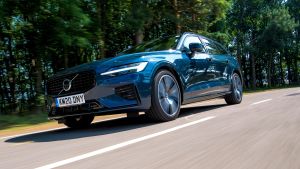
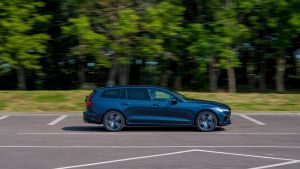
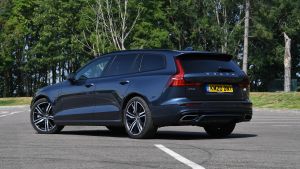
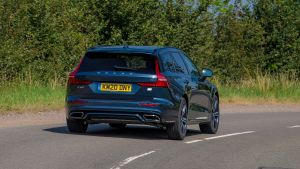
New Volvo V60 Recharge T6 2020 review

https://ift.tt/31Edc4S

Verdict

Although the Volvo V60 T6 isn’t perfect, there’s plenty to love about this new plug-in version of the Swedish company’s smallest wagon. Low running costs, strong performance and plenty of style; the V60 T6 has a lot going for it. It’s not as sharp to drive as a BMW 3 Series Touring, but for most buyers – including the company car drivers it’s squarely aimed at – it’ll be an excellent all-rounder. 

Until now, if you wanted a compact executive Volvo estate with a plug-in hybrid powertrain, you had little choice but to opt for the fire-breathing 395bhp V60 T8 – with or without the punchy Polestar pack. At more than £50,000, though, it had a big price tag, despite its all-round abilities. 

Seeing sense, the Swedish maker has added a more keenly priced, but still quite quick, T6 to its BMW 3 Series-rivalling range. It’s certainly easier to make the numbers stack up; at a smidge over £45k, it’s more affordable for private buyers, while the company car drivers this model is so firmly aimed at will love the bargain Benefit-in-Kind (BiK) tax banding of just 10 per cent.

Plus, if you have access to off-street parking and can plug in the T6 after each journey, Volvo says you’ll top 130mpg – but if you let the batteries run dry, that figure will plummet to less than 40mpg.

On the road, the T6 feels fast – alarmingly so at times. Combined, the petrol engine and electric motor develop 335bhp, allowing this ‘entry-level’ V60 hybrid to hit 0-62mph in 5.4 seconds. That’s not just faster than most hot hatchbacks, it’s on par with Porsche 911s from 10 years ago.

Let’s not get carried away, though; the V60 has never been able to challenge the 3 Series Touring for outright driver appeal, and even in the sporty R-Design trim we’re testing here, it falls short once again. 
image
image
image
image
image
image
image
image
image
image
image
image
image
image
image

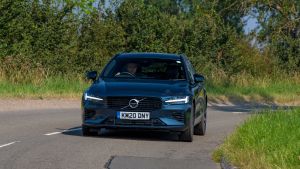
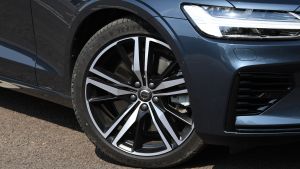
However, we’d argue the vast majority of new car buyers will be perfectly happy with the Volvo’s handling. It rides well on optional 19-inch wheels, body control is good and, while the steering is light, it’s accurate enough to give you confidence.

Refinement is fantastic, too. And if your journeys are largely confined to the city, in theory you’ll benefit from as much as a 34-mile range on electric power alone. In mixed driving we found 25-27 miles was more realistic, though; charging the batteries takes 2.5 hours from a 3.7kW wallbox, or six hours on a three-pin plug.

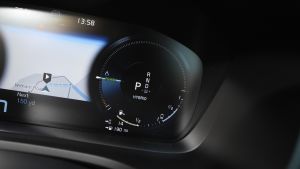
There are a number of drive settings to play with – from the default Hybrid mode, through to Pure and Power. The former prioritises electric running by limiting throttle response, while the latter combines the car’s two power sources for maximum shove. We found ourselves leaving it in Hybrid, using the power meter on the dash to prevent unnecessary use of the engine.

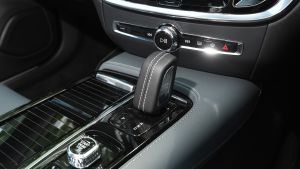
On the whole, the hybrid system works well. The T6 shuffles between petrol and electric power effectively, shutting down the engine imperceptibly when coasting, before firing up as needed. The gearbox’s B mode brings a useful level of brake regeneration, feeding energy back into the battery that would otherwise be lost. It doesn’t allow one-pedal driving, but use it intelligently and you’ll find yourself relying less heavily on the traditional friction brakes.

image
image
image
image
image
image
image
image
image
image
image
image
image
image
image

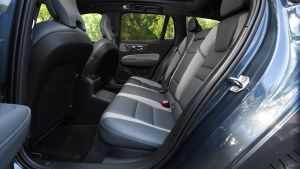
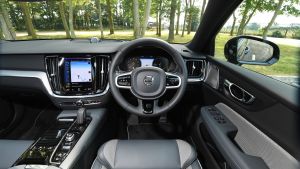
Elsewhere, the V60 T6 is as beautifully finished and well equipped as you’d expect. This new powertrain isn’t available in the entry-level Momentum trim, which is a shame, but our R-Design test car looked great – especially with its optional Denim Blue paint and Slate leather interior.

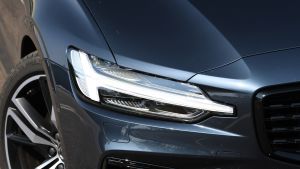
All models get at least 18-inch alloy wheels, automatic LED headlights, two-zone climate control and that glorious nine-inch touchscreen. Also available in Inscription spec, the ‘posh’ V60 switches the R-Design’s racy trim for a luxury look, with chrome window surrounds and silver roof rails. Safety is a given across the board, and quality is top-notch, regardless.

But of course, no Volvo worth its salt can offer all this without having a big boot and space for all the family. Thankfully, the V60 delivers here, too; the 529-litre boot (more than a 3 Series Touring, Mercedes C-Class Estate or Audi A4 Avant) is carried over from the conventional petrol and diesel models. There’s nowhere to store the charge leads under the floor, but every version gets a bag to prevent the cables from getting tangled around your shopping or luggage.

  Volvo V60 Recharge T6 AWD R-Design
Price:  £45,230
Engine:  2.0-litre 4cyl petrol plus electric motor
Power:  335bhp/400Nm
Transmission:  Eight-speed automatic, four-wheel drive 
0-62mph:  5.4 seconds
Top speed: 112mph
Economy/CO2: 134.5mpg/46g/km
On sale:  Now


from Sitewide RSS feed https://ift.tt/3bhsEal

New Volvo V60 Recharge T6 2020 review - pictures

https://ift.tt/eA8V8J

Pictures of new Volvo V60 Recharge T6 2020 review

from Sitewide RSS feed https://ift.tt/3jAIik3

New Kia Ceed iMT 48V mild hybrid review - pictures

https://ift.tt/eA8V8J

Pictures of the Kia Ceed hatchback with new Intelligent Manual Transmission

from Sitewide RSS feed https://ift.tt/2D7QF6Z

New Kia Ceed iMT 48V mild hybrid review

https://ift.tt/2YI2LLA

Verdict

KIA believes that its clever new iMT system will deliver a modest reduction in fuel consumption and CO2 emissions, and the figures and our early drive show promise. The system’s action feels little different from any conventional clutch pedal, and promises the added benefit of reducing wear. The Ceed’s updated infotainment tech, meanwhile, just improves what was already one of the best systems in the segment. 

There’s  no denying that Kia is at the forefront when it comes to producing electric powertrains, but the company still feels that there’s life in the old internal combustion engine yet.

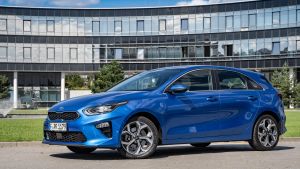
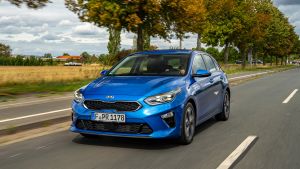
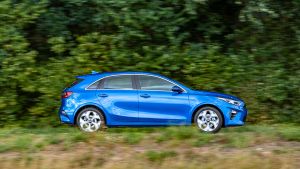
Kia’s latest bid to trim fuel consumption is known as Intelligent Manual Transmission (iMT) coupled with a 48-volt mild-hybrid system. We’re trying it here for the first time in the Ceed hatchback, where it’s paired up with the existing 136bhp diesel. UK sales are expected to begin for the Ceed and its derivatives – XCeed, Proceed and Ceed Sportswagon – at around the turn of the year, while the same system will make its way into 1.0-litre turbo petrol versions of the Rio and Stonic before the end of 2020.

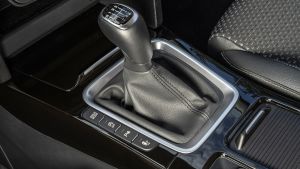
The key to the new system is replacing the traditional hydraulic clutch linkage with an electro-hydraulic one. This allows the clutch to open so that the engine can be switched off, even with the car in gear.

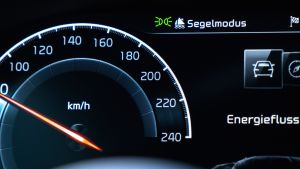
In practice, it works like this: imagine you’re approaching a junction, so you ease off the accelerator and begin to coast. With no throttle applied, the iMT system can open the clutch and switch off the engine, in effect letting the car ‘sail’ with as little mechanical drag as possible. As soon as the accelerator is pressed, the engine fires into life almost instantly thanks to the electric starter/generator and the energy stored in the 48-volt battery. Clever.

If you’re coasting from high speeds, you might drop below that gear’s limits, which could cause the engine to labour, or even stall, if the clutch is re-engaged. In this case, the engine stays off and the clutch open until either the correct gear is selected, or the speed matches the chosen ratio.

image
image
image
image
image
image
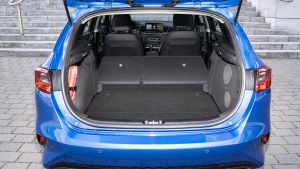
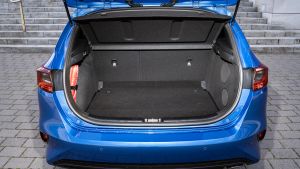
With a capacity of 395 litres, the Ceed’s boot is above average for the class. The rear bench drops easily, increasing space to 1,291 litres, and there’s no bulky step
image
image
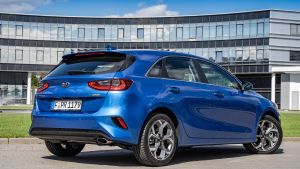
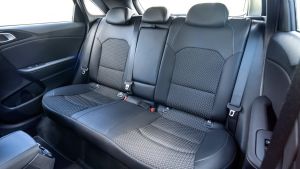
Space in the Ceed’s back seats remains unchanged; there’s enough room for a couple of adults, although rivals such as the Skoda Octavia feel even more roomy
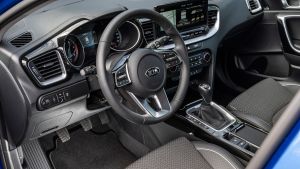
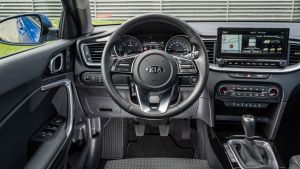
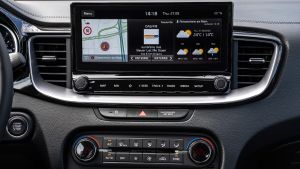
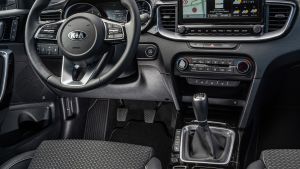
UK specifications have yet to be confirmed, but Kia’s new 10.25-inch display is one of the best around. Sharp graphics and fast response times make it a hit.
image
image
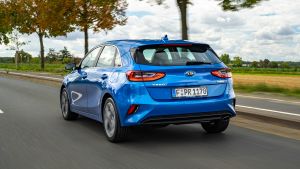
We tried new iMT system in regular hatchback, but it will be available in all derivatives of the Ceed
image
image
image

On the road, the electric clutch feels like any other mechanical system. The pedal has a constant weight throughout its travel, and the biting point is always in the same place. It will continue to stay there when the clutch is coming to the end of its life, too – a life Kia says will be extended thanks to iMT’s ability to more consistently and accurately engage compared to a human input.

As in other Ceed models there are three driving modes – Eco, Normal and Sport – but the sailing function is only available in Eco. Regardless of the setting, the 1.6-litre diesel unit feels a little lazy; fuel saving takes priority over a sporty feel – as it should for a family hatchback.

We’ll need to try the car for a more extended period in the UK to be sure of any real-world fuel-saving potential, but the indicated 60.1mpg on our German test route is a promising start. Kia says that the combination of the mild-hybrid system and iMT helps to cut emissions by three per cent, with WLTP figures set between 98g/km and 103g/km. That places the Ceed iMT into the 22 and 23 per cent Benefit-in-Kind brackets.

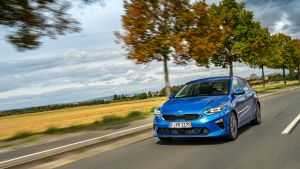
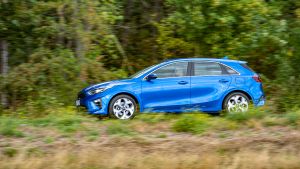
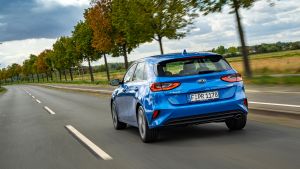
The rest of the driving experience is the same as in any other version of the Ceed; a deft balance between ride and handling, precise, well weighted steering, and decent refinement mean that it’s above average for the class.

Elsewhere, the Ceed family benefits from a new 10.25-inch touchscreen infotainment system that we’ve already seen in the Niro. It’s arguably the best such set-up available among the mainstream manufacturers, with clear graphics, quick loading times and a logical interface. The entry-level Ceed continues with a smaller eight-inch display, but like the larger units, this gets Apple CarPlay and Android Auto as standard.

The larger infotainment screen allows integration with Kia’s latest UVO Connect software. This can plot navigation ETAs more accurately by using both real-time and historical traffic data, while the smartphone app now offers augmented-reality Last Mile Navigation and car status updates.

Kia has yet to confirm prices for the Ceed iMT models, but the mid-level 3 trim of our test car, with 17-inch alloys, climate control, a reversing camera and that larger screen system, should cost roughly £24,500.

Model Kia Ceed 1.6 CRDi 48V iMT 3
Price £24,500 (est)
Engine 1.6-litre 4cyl mild-hybrid diesel
Power/torque 136bhp/280Nm
Transmission Six-speed manual, front-wheel drive
0-62mph 10.2 seconds
Top speed 124mph
Economy/CO2 64mpg (est) / 99g/km
On sale January 2021


from Sitewide RSS feed https://ift.tt/3jtFPb3

New Mercedes-AMG GLE 53 2020 review - pictures

https://ift.tt/eA8V8J

Pictures of the new Mercedes-AMG GLE 53 2020 review

from Sitewide RSS feed https://ift.tt/3b6TXnw

New Mercedes-AMG GLE 53 2020 review

https://ift.tt/3lovoqS

Verdict

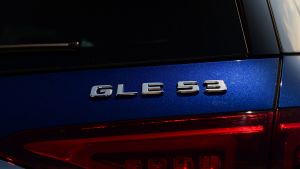
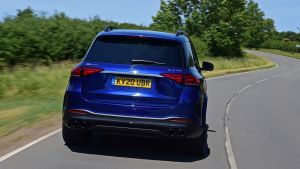
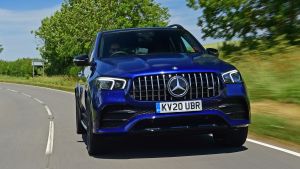
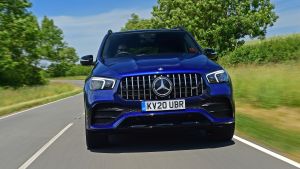
The GLE 53 is yet another AMG-tuned Mercedes that does a good job of combining performance with comfort and usability. It’s still not the most efficient SUV, but it comes with seven-seat capability that few rivals offer and a (mostly) well trimmed cabin that’s loaded with tech and kit, so the GLE 53 is a pricey but nicely executed SUV that’s fast enough and fine to drive, so it has its niche pretty much nailed.

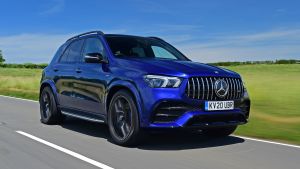
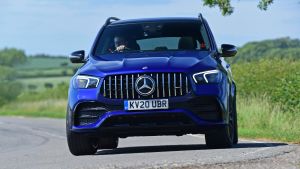
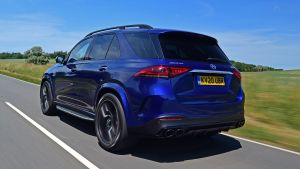
The performance-SUV market is crowded, especially at this sub- super-SUV level. There’s the Porsche Cayenne GTS, the BMW X5 M50i and now this, the Mercedes-AMG GLE 53.

This is a car that, on the face of things, lets you have your cake and eat it, though, because the GLE 53 uses Mercedes’ EQ Boost mild-hybrid tech to improve performance and efficiency.

This is a 2,305kg machine, mind, and with ‘only’ 429bhp to shift that bulk you might think the GLE isn’t all that rapid.

You’d be wrong. The 0-62mph sprint takes 5.3 seconds, so this seven-seat family SUV can embarrass hot hatchbacks. However, on the second count, with official fuel consumption of 26.2mpg and CO2 emissions of 248g/km, it’s still going to be as pricey to run as it is to buy, at £81,055.

The engine is sweet. It’s a twin-turbo 3.0-litre straight-six unit that, in the car’s Sport and Sport+ modes, has a lovely musical note that encourages you to rev it.

Despite the mild-hybrid system having a maximum 22bhp and sizeable 250Nm boost, you will need to rev it to tap into that maximum performance.

The GLE 53 is perfectly strong enough just cruising around, but because of that weight, you have to extend it to really get it moving. When it does get going, it’s swift, while the nine-speed automatic gearbox’s shifts are as seamless and as quick as you’d want in a car like this. 

image
image
image
image
image
image
image
image
image
image
image
image
image
image
image
image
image
image
image

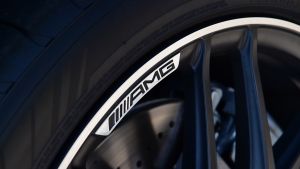
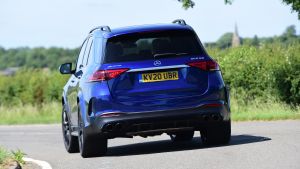
However, the faster you go the more you notice the Mercedes’ mass. Our car was fitted with optional 22-inch wheels, but despite that, the ride was mostly fluid and comfortable. Those huge tyres are so wide that they cause some bigger body movements because they’re more susceptible to picking up bumps, but the damping is plush and controlled in Comfort, so that the GLE 53 delivers exactly that. In the sportier chassis modes, the dampers are more tautly controlled, which means the rocking and rolling on country lanes is exacerbated. But this still a comfortable car.

The GLE is also a mute device because the steering offers little feedback, but the weight and speed of response encourage you to drive it a bit harder – more so than in some of BMW’s sporty SUVs.

The level of traction is good, as you’d imagine with 325-section back tyres (the same as a Porsche 911 GT2 RS).

Even though it’s not that involving, the GLE 53 does a decent job of going quickly, but even with a focus on performance, an SUV such as this has to be easy to live with, and this is where the Mercedes makes a convincing case for itself.

image
image
image
image
image
image
image
image
image
image
image
image
image
image
image
image
image
image
image

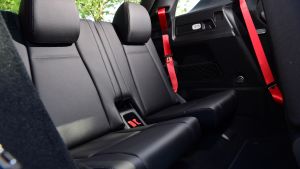
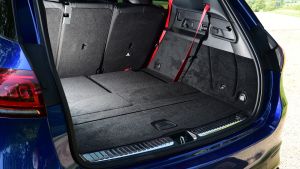
It has seven seats. Although most owners might only use five of them, that configuration offers 630 litres of boot space, which is plenty for a family.

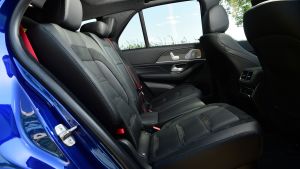
There’s a respectable level of space in the third row, so it’ll be fine for children, but a little more cramped for adults.

The second-row seats slide and fold independently, which gives the option to alter how much space there is on offer. The electric folding mechanism that allows you to get into the very back is slow, though, and the void you have to clamber through still isn’t the biggest.

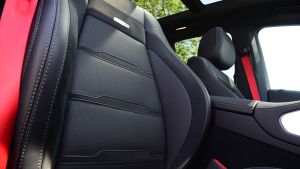
There are also a few issues with interior material quality, given the price. At more than £80,000, some parts of the GLE’s trim, such as the air-vent surrounds, could look a little smarter, but this doesn’t detract from where plenty of money has been invested: the tech.

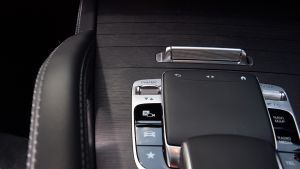
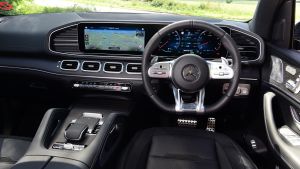
The twin 12.3-inch screens are an evolution of what we’ve seen previously from Mercedes, with even sharper graphics and quicker responses. The touchpad input method takes a little getting used to, especially on the move, but you can bypass some of the more fiddly steps altogether because the screen is touch-sensitive, too.

The MBUX infotainment features sat-nav with augmented reality, which is a great touch. Apple CarPlay and Android Auto are also standard if you’d prefer to use the smartphone integration, and there’s wireless charging to help here, too.

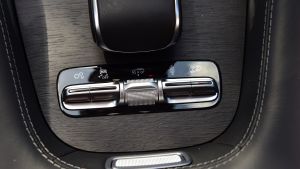
LED lights with auto high beam, AEB, blind spot and lane-keep assist, heated leather sports seats, cruise and four-zone climate control, keyless operation, a powered tailgate and a few AMG-specific trim touches and a sports exhaust are all standard, so it’s well equipped. But then, you’d expect as much for the money.

  Mercedes-AMG GLE 53 4MATIC+ Premium Plus
Price:  £81,055
Engine:  3.0-litre 6cyl turbo petrol
Power:  429bhp/520Nm
Transmission:  Nine-speed automatic, four-wheel drive
0-62mph:  5.3 seconds
Top speed: 155mph
Economy/CO2: 26.2mpg/248g/km
On sale:  Now


from Sitewide RSS feed https://ift.tt/2YLLFN0