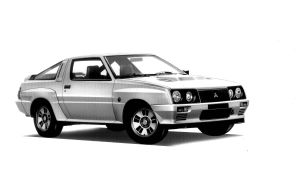
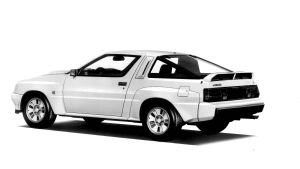
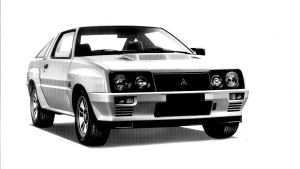
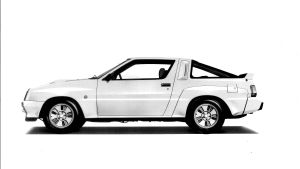
Fresh light has been cast on Mitsubishi’s stillborn attempt to join the likes of the Audi Quattro and Ford RS200 in rallying’s craziest era, after previously unseen official sketches of the company’s Starion 4WD were discovered in the depths of an archive.
These artist’s impressions, published here for the first time, were sent as part of internal correspondence at Mitsubishi’s UK importer in 1984. They show the company was serious about building 200 roadgoing examples of the Starion 4WD - the number required to rubber-stamp its participation in Group B rallying.
The Mitsubishi project remains one of world rallying’s ‘lost cars’, alongside Ford’s rear-wheel-drive Escort RS1700T (abandoned in favour of the RS200) and mid-engined versions of the Audi Sport Quattro that were tested behind the Iron Curtain in Czechoslovakia but ultimately dismantled after the project was discovered.
Conceived as the follow-up to the rear-drive Lancer 2000 Turbo, the Starion 4WD was developed by the Ralliart team in the UK, under the direction of former driver Andrew Cowan and with input from former Audi technician Alan Wilkinson. It would have had a 2.0-litre engine in production form - in effect, an updated version of the Lancer’s motor - and this would have been expanded to 2,140cc for the 20 ‘evolution’ competition specials that would have been allowed under Group B rules.
Mitsubishi Starion 4WD Group B rally carMitsubishi Starion 4WD Group B rally carMitsubishi Starion 4WD Group B rally carMitsubishi Starion 4WD Group B rally car
The engine is estimated to have had around 350bhp, and extensive use of carbonfibre and kevlar for the bodywork is said to have kept the car’s kerbweight at just over 1,000kg. These numbers would have been a solid base for the Starion 4WD to be competitive, at least until even more brutal versions of the Quattro and Peugeot’s 205 Turbo 16 arrived in the second half of 1985.
The most obvious difference between the Starion 4WD and its conventional rear-drive production stablemates is at the front, where the regular car’s pop-up headlights have been replaced by a conventional quad-lamp arrangement. This, in turn, allowed Cowan and his engineers to drastically shorten the Starion’s front overhang, helping to improve its weight distribution, while also squeezing in a larger radiator.
A letter accompanying the images suggests that Mitsubishi was planning to put numbered plaques on all of the Starion 4WDs, and says that the car was being lined up to make its debut at the 1984 British motor show. This would tally with the development rally car’s appearance on that summer’s Mille Pistes Rally, a notoriously rough event held on the huge Canjuers military base in southern France, where it finished sixth in the hands of Mitsubishi test driver Lasse Lampi.
The car also ran in prototype form as part of a national event rolled into the 1984 RAC Rally - but the project dragged badly and while homologation was expected to be sealed sometime in 1986, the cancellation of the Group B class in spring of that year forced the Starion 4WD to be abandoned.
The work on the proposed model wasn’t a complete waste, however; Mitsubishi and particularly Ralliart took knowledge on engines and transmissions gleaned from the project and fed it into a new challenger for the more production-based Group A regulations: the Galant VR-4. That car scored the Japanese brand’s first WRC victories, persuading it to commit further with the Lancer Evo that went on to win four back-to-back World Rally Championships for Tommi Makinen, as well as a makes title for the Japanese brand itself in 1998.
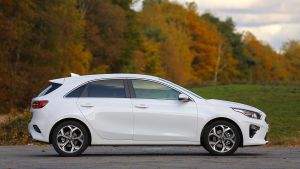
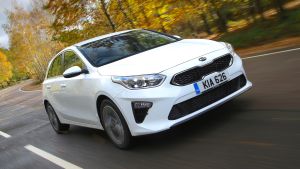
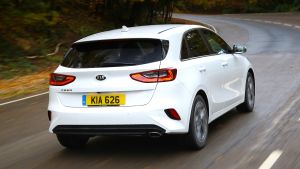
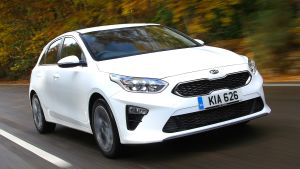
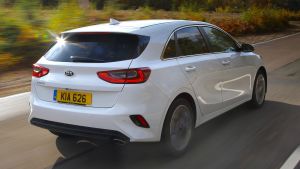
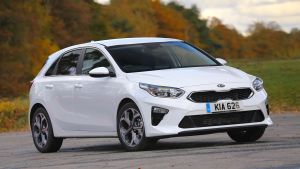
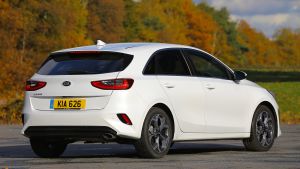
This entry-level Kia Ceed diesel is great value, with lots of kit, an efficient engine and a practical interior. It’s also good to drive, comfortable, and the engine is punchy, although the Kia can’t match the Ford Focus for fun, or the Skoda Octavia for practicality. It’s still a decent family car, though, and does everything you need at an affordable price – if you can get over the slightly dull image.
It wasn’t all that long ago that the most appealing versions of family hatchbacks like the Kia Ceed were the diesels. Tax rules and high fuel prices pushed buyers into these more efficient models, and although times have changed and diesel doesn’t have the same appeal now, there’s still a place for it.
This version of the Ceed proves as much, because it’s a really well rounded vehicle in diesel form – and modern technology is at the heart of that. This car uses a 1.6-litre diesel engine, assisted by a 48V mild-hybrid set-up that gives a small boost to efficiency by recuperating energy that would otherwise be lost when you’re slowing down, then redeploying it with a small hit of torque to assist when pulling away again.
Another innovation at work here is the new ‘iMT’ intelligent manual transmission six-speed gearbox. Instead of using a hydraulic clutch like most manual cars, this has an electronic connection between the pedal and the mechanical parts, which helps to give even greater efficiency.
The computer-controlled electronic clutch means the engine can be shut off when coasting, and sooner when coming to a stop, which also helps refinement.
You do occasionally notice the system at work, because you can feel the clutch engage just after you’ve lifted your clutch foot. However, most of the time it feels the same as driving a normal manual car. The gearshift is slick and enjoyable to use, while the torquey diesel engine is a highlight as well. Okay, it sounds rather gruff and rattly, but thanks to 280Nm from just 1,500rpm, it feels quicker than its 0-60mph time of 9.8 seconds suggests. You can easily accelerate without having to change down a gear, because there’s plenty of pulling power low down in the rev range.
The engine is also really economical. Official figures say 62.8mpg is possible and we found that the diesel Ceed returned over 60mpg easily. It’s not likely to be a great solution for company car drivers, because ultra-low tax on petrol-electric hybrids and full-EVs means they’re cheaper to run – but for a private buyer who does a lot of motorway miles, a small diesel like this is still incredibly efficient.
Even this entry-level Ceed comes with multi-link rear suspension – most cheap hatchbacks have to make do with a torsion beam – and that helps to ensure it rides and handles well. There’s a good amount of grip and composure in bends, and the suspension does a fair job of smoothing over any bumps in the road.
The steering doesn’t have much feel, and although you can adjust the weight by switching between the various driving modes, it just isn’t as pleasant as the steering in rivals like the Ford Focus. In fact, although the Ceed is a good car to drive, it can’t match the Ford when it comes to driver involvement.
Yet with a list price of £21,875, the Ceed ‘2’ is cheaper than any diesel Focus – and the Ceed even looks like a good buy next to the soon-to-be-replaced but still-great-value Vauxhall Astra.
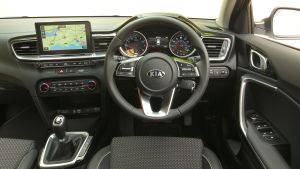
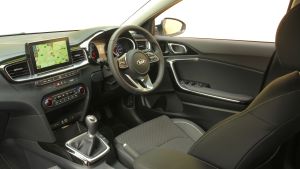
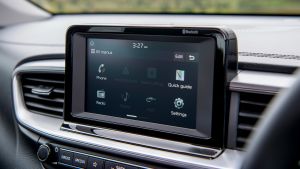
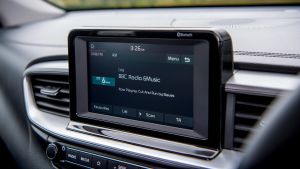
This Ceed is really well equipped given that it’s an entry-level model, too. It comes with an eight-inch touchscreen display with Android Auto and Apple CarPlay, so we don’t mind the lack of sat-nav – an £800 upgrade to 2 NAV trim as shown in our pictures. It also has 16-inch alloys, cruise control, air-con and a reversing camera, while safety kit is great too, including lane-keep assist, driver-attention warning, high-beam assist, AEB and hill-start assist all as standard.
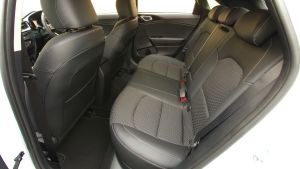
The Kia’s interior is functional, and although the hard plastics and cloth trim aren’t exactly upmarket, it’s a pleasant cabin with lots of room for passengers, and we wouldn’t expect a lot more at this price. In the rear, there’s enough head and legroom for adults in the outer seats.
There are 397 litres of space in the boot, which means it’s bigger than a Ford Focus (375 litres), but not as roomy as a Skoda Octavia (huge, at 600 litres). Under the boot floor you’ll find the battery for the mild-hybrid set-up, so there’s no extra storage.
In cash and on finance the Ceed is cheaper than entry-level versions of the Octavia and Focus. And although it is less practical than the Skoda, and not as good to drive as the Ford, it’s right in the mix with those great cars, because it’s really economical and well equipped.
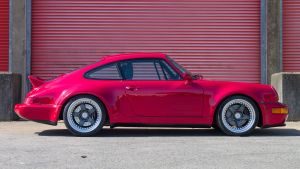
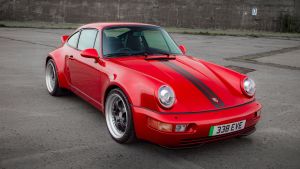
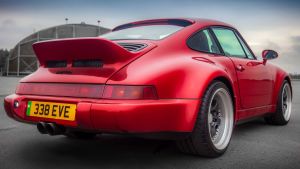
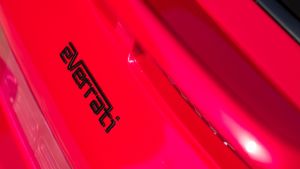
Everrati, the Oxfordshire-based EV conversion specialist, has unveiled its latest project – an electrified (and sympathetically modified) version of the 964-generation Porsche 911. Prices start from £250,000, excluding the cost of the donor car.
Instead of the 247bhp 3.6-litre flat-six petrol engine found in untouched original cars, the Everrati 911 Signature is powered by an electric motor on the rear axle and a 53kWh battery. The system produces 500bhp and 500Nm of torque, which the firm says is enough for a 0-62mph time of “less than four seconds” and a maximum range of 150 miles.
The high-voltage electrical system is also compatible with the latest DC rapid chargers, which Everrati says will top the battery up from 10 to 100 per cent in less than an hour - although unconfirmed, given the size of the battery this is likely to be using a 50kW supply.
The company has also added a regenerative braking system, which harvests energy that would otherwise be lost when decelerating and feeds it back into the battery.
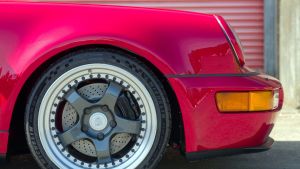
Keen-eyed readers will also note that this 911 doesn’t wear its original bodywork. Everrati has replaced the coupe’s front and rear wings with wider carbon fibre panels and fitted genuine Porsche widebody front and rear bumpers to give the car a more muscular stance.
The panels have been reinforced with steel to retain some side-impact protection, while the roofskin has been swapped for a carbon fibre replacement. As such, the firm says that despite the heavy battery pack, it’s electrified restomod weighs less than the original Porsche 911 964 Coupe on which it’s based.
Everrati has also upgraded other components to help deal with almost twice the power of the original 964. Upgrades include drilled and vented brake discs, bigger Brembo calipers, new bushes and a range of 17 and 18-inch alloy wheels.
There are also two suspension packages to choose from: a standard set-up with fixed coilover suspension and a performance option with fully adjustable dampers, controlled from the touchscreen in the cabin. Larger Brembo brakes are also optionally available.
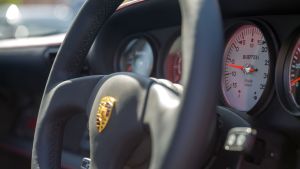
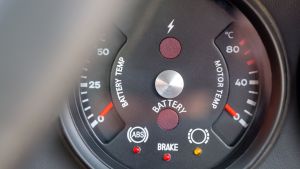
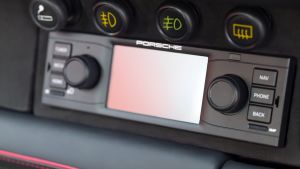
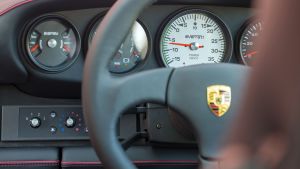
The interior has received a similarly extensive overhaul, with a custom air-conditioning system, a modern Porsche infotainment system, Porsche-inspired EV gauges and new electrically adjustable seats trimmed in either leather, Alcantara or fabric upholstery.
Carbon RS seats can be specified as a further optional extra.
Now read about Electrogenic’s EV conversions for the Triumph Stag and Morgan 4/4 by clickinghere…
Toning down the styling means the Civic Type R now offers something just a little more reserved in Sport Line spec, opening it up to a previously untapped market of buyers who can’t live with the standard car’s lairy looks. The interior and infotainment could still be improved, but the engine, gearbox, chassis, steering and brakes make this still the most enjoyable and engaging hot hatch on sale today. The best just got better.
The Honda Civic Type R is our favourite hot hatchback, with updates to the formula last year cementing its place at the top of the class at our New Car Awards for the fourth year in a row. However, it’s always had an overtly in-your-face look – until now.
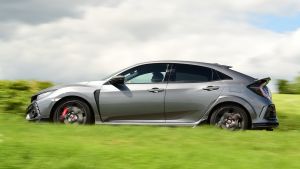
That’s because the £35,400 Honda Civic Type R Sport Line does away with one of the more aggressive styling cues the model is known for – the massive rear wing.
Instead, a low-level spoiler gives the car a more refined appearance; the blistered and bulging bodykit remains, but is now combined with 19-inch alloys (an inch smaller than the Type R GT’s), for a more reserved look.
Those tyres have softer sidewalls, and Honda claims that the ride is more refined as a result. It’s right, because in Comfort mode on the kind of twisting back roads that the Type R loves, it’s better than ever.
Honda Civic Type R Sport Line - exhaustsHonda Civic Type R Sport Line - cabinHonda Civic Type R Sport Line - sideHonda Civic Type R Sport Line - transmissionHonda Civic Type R Sport Line - Sport modeHonda Civic Type R Sport Line - dialsHonda Civic Type R Sport Line - interior detailHonda Civic Type R Sport Line - rear seatsHonda Civic Type R Sport Line - bootHonda Civic Type R Sport Line - front lightHonda Civic Type R Sport Line - frontHonda Civic Type R Sport Line - rear staticHonda Civic Type R Sport Line - sat-navHonda Civic Type R Sport Line - stylingHonda Civic Type R Sport Line - front corneringHonda Civic Type R Sport Line - rear badgeHonda Civic Type R Sport Line - rearHonda Civic Type R Sport Line - rear detailHonda Civic Type R Sport Line - dashHonda Civic Type R Sport Line - seat detail
The Sport Line’s ride quality is superb, but the Type R has lost none of its focus, responding to brushes of the brake pedal in corners by tightening its line, and offering the level of adjustability we’ve come to expect. It’s something that few hot-hatchback rivals can match, front-wheel drive or otherwise.
The steering is superbly sweet, too, and it commands a front end that offers simply incredible levels of grip and traction, the latter helped by a limited-slip differential.
It puts down the engine’s 316bhp and 400Nm of torque with relatively little fuss for a 0-62mph time of 5.8 seconds and a top speed of 168mph. In a family hatch.
The engine is explosive once you’ve waited that fraction for the turbo to wake up. It’s effective and pulls hard, right to the rev limiter, but it’s not accompanied by a particularly thrilling soundtrack, and this is made worse by an augmented drone in the Sport and +R modes; we’d prefer to listen to the coughs and chirrups from the turbo.
Honda Civic Type R Sport Line - exhaustsHonda Civic Type R Sport Line - cabinHonda Civic Type R Sport Line - sideHonda Civic Type R Sport Line - transmissionHonda Civic Type R Sport Line - Sport modeHonda Civic Type R Sport Line - dialsHonda Civic Type R Sport Line - interior detailHonda Civic Type R Sport Line - rear seatsHonda Civic Type R Sport Line - bootHonda Civic Type R Sport Line - front lightHonda Civic Type R Sport Line - frontHonda Civic Type R Sport Line - rear staticHonda Civic Type R Sport Line - sat-navHonda Civic Type R Sport Line - stylingHonda Civic Type R Sport Line - front corneringHonda Civic Type R Sport Line - rear badgeHonda Civic Type R Sport Line - rearHonda Civic Type R Sport Line - rear detailHonda Civic Type R Sport Line - dashHonda Civic Type R Sport Line - seat detail
The motor isn’t an all-time great, but it’s connected to one of the best transmissions ever engineered. A more ergonomic gear knob was fitted to the six-speed gearbox last year, but the fundamentals haven’t changed; the weight and feel of the shift are great and add to the experience. The Type R’s Brembo brakes offer solid pedal feel and strong stopping power, too.
However, it’s not all positive for Honda’s hot hatch. While the Alcantara steering wheel is good to hold and the deep bucket seats place you well, material quality isn’t great for the car’s price and the infotainment still feels like an afterthought, even if you do get a lot of features fitted as standard.
These include a seven-inch touchscreen with sat-nav and smartphone connectivity, wireless charging, adaptive cruise control, a rear camera and lots of advanced safety kit.
There’s no change to the Civic’s practicality, either, so rear passenger room is great and there’s a 420-litre boot. Removing the big wing means visibility is a touch better, too.
So the Sport Line isn’t exactly as reserved as a Volkswagen Golf GTI, despite its visual modifications, but it’s certainly not as divisive as the standard Type R. It means the hottest Civic’s appeal is now that little bit broader than before.