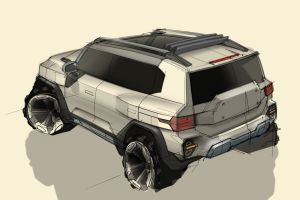
SsangYong has confirmed a new next-generation SUV codenamed X200, teased in these new sketches which serve another look at the Korean firm’s new styling direction.
Like the similarly teased J100, the X200 concept uses a new design philosophy called ‘Powered by Toughness’, which appears to be a radical departure from the brand’s current design language.
The front end features round headlights and vertical grille slats that bring certain Jeep models to mind, with a deeply sculpted bumper and extensive body cladding.
Muscular box arches accommodate beefy all-terrain tyres and give the X200 a wide-set, aggressive stance. The windscreen is flat and meets with a squared-off roofline, reminiscent of off-road icons like the Mercedes G-Class.
There’s more body cladding along the sills, and the utilitarian theme continues with a set of heavy-duty roof bars. The roof itself features a fold-away canvas section, similar to the sliding fabric roof that can be specified with the new Land Rover Defender.
The rear arches end abruptly with a short overhang and integrated tail lights, while the rear bumper features similar cutouts and body cladding as seen at the front. There’s no visible spare wheel, but four holes in the tailgate indicate that one could be fitted.
The overall look is that of a tough, purposeful off-roader with a retro feel, and builds upon the design theme showcased by the SsangYong J100 EV concept released earlier this year.
For its future models, SsangYong is promising to use “eco-friendly powertrains”, and the J100 has already been confirmed as fully electric. However, Auto Express understands that the production version of the X200 is set to use the 1.2-litre turbocharged three-cylinder petrol engine found in the Tivoli SUV, which puts out 126bhp.
It is likely that the X200 will receive an electrified powertrain alongside the conventional petrol unit. SsangYong is eager to switch to full-electric, and a PHEV model isn’t on the cards, so the X200 could use the marque’s upcoming bespoke EV platform.
In 2018, SsangYong revealed plans for a new pure-electric platform for mid-size and large SUVs. The first car on the new platform will hit showrooms in 2024, which could line up with an eventual production version of the X200 concept.
However, there is potential that the X200 could utilise an adapted combustion-engine platform similar to the tech that underpins the brand’s Korando e-Motion.
The Korando e-Motion is SsangYong’s first full EV and uses a single 187bhp electric motor, which is powered by a 61.5kWh battery. On the NEDC testing cycle, this gives more than 260 miles of range.
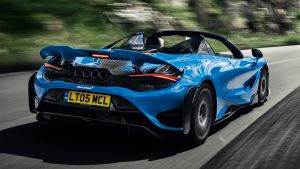
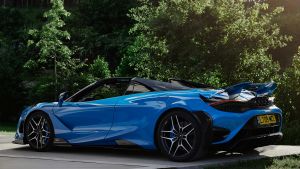
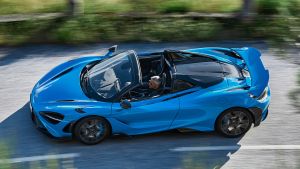
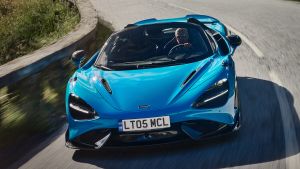
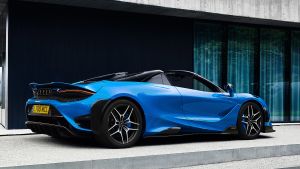
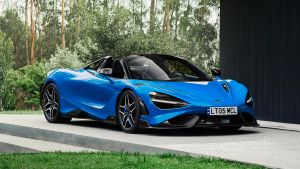
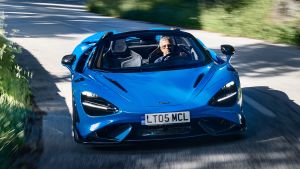
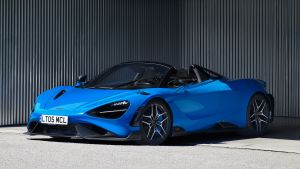
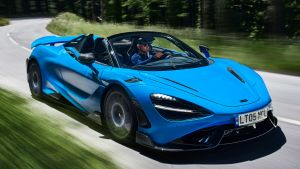
It’s less than a year since the McLaren 765LT ‘longtail’ received a full five-star review from Auto Express. Now the Woking supercar manufacturer is lifting the lid on that model with the new 765LT Spider, a fresh convertible that will be built in equally limited numbers to the sold-out coupe.
The 765LT Spider gets the same 4.0-litre twin-turbocharged V8 as the hard-top, producing 755bhp and 800Nm of torque. Even with an electrically operated, single-piece carbon-fibre retractable roof, the new arrival weighs only 49kg more than the regular 765LT, at 1,388kg. That means it’s 80kg lighter than the 720S Spider, and helps to make it the fastest-accelerating LT Spider to date; 0-62mph takes just 2.8 seconds, and the car can reach 124mph (200kph) from rest in 7.2 seconds. The top speed is 205mph.
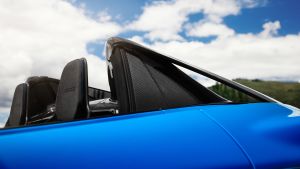
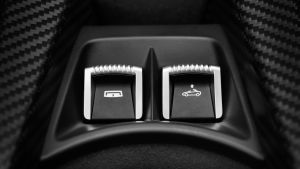
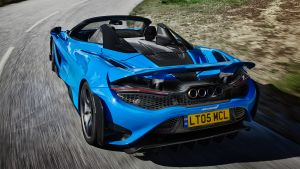
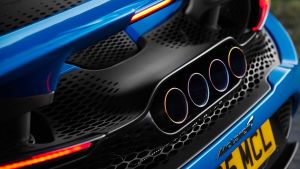
The roof opens in 11 seconds, thanks to a complex mechanism involving eight motors, and can be operated at speeds of up to 32mph. But even with it in place, the 765LT’s electric rear window can still be opened, allowing the car’s occupants better access to the noise from the titanium exhaust. That system weighs around 40 per cent less than a conventional stainless steel unit, at just 10.9kg.
The Spider version of the 765LT was developed alongside the coupe, McLaren says, and no additional bracing was required to allow the roof to be removed. Carbon-fibre supports are fully bonded into the rear of the adapted MonoCage II structure, called MonoCage II-S in Spider form, to provide rollover protection.
McLaren is claiming impressive on-track performance for the 765LT Spider, which produces as much as 25 per cent more downforce than the regular 720S Spider. It gets optimised gear ratios that help to make in-gear acceleration up to 15 per cent faster than that car, too.
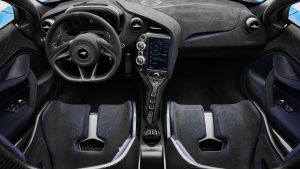
Inside, there’s an eight-inch central infotainment screen, but no audio system, which has been removed in the pursuit of weight savings. A four-speaker McLaren set-up can be fitted as a no-cost option, however, along with Bluetooth integration and voice recognition. A more extensive Bowers & Wilkins system is also available.
Eight colour themes have been designed, mixing the interior Alcantara fabric colours with unique contrast stitching. Buyers can spec the digital dash and infotainment systems with carbon-fibre surrounds, too.
For those who want to personalise their 765LT Spider further, McLaren Special Operations has already defined a pair of optional packs for the car. The MSO Clubsport Pack reduces overall weight further, thanks to carbon-fibre racing seats and upgraded brakes taken from the McLaren Senna hypercar. The MSO LT Black Pack, meanwhile, brings a gloss-black finish to a number of external components such as the tonneau cover, front splitter, rear bumper, air intakes and mirror casings.
The 765LT Spider comes with a premium of around £30k over the coupe, being priced from £310,500. As with the coupé, just 765 examples will be produced, and McLaren says that this year’s allocation has already been filled by orders from regular customers in advance of the car’s announcement.
Tesla CEO Elon Musk recently confirmed plans to open the Tesla Supercharger network of rapid electric car charging points up to vehicles from other manufacturers. Musk has now offered some clarity on how non-Tesla EV drivers will be able to access the network.
During Tesla’s quarterly financial conference, he said that electric car drivers looking to use the Supercharger network will access the charging points via the firm’s smartphone companion app. They’ll sign up for a Tesla account and be charged for a charging session in a similar way as they would using any other third-party charging point.
“We are thinking about a real simple thing where you just download the Tesla app, you go to the Supercharger, you just indicate which stall you are in, you plug in your car, even if it’s not a Tesla, and you just access the app to tell “turn on the stall that I’m in for how much electricity”, and this should work for almost any manufacturer’s electric car,” he suggested.
However, Musk confirmed that drivers of cars with older and slower charging standards would be liable to pay more for electricity at a Supercharger point.
“If the charge rate is super-slow then someone will be charged more,” he said. “We’ll also be smarter with how we charge for electricity at the Supercharger,” suggesting prices may vary according to demand or the time of day.
Tesla is currently upgrading its Superchargers so they can supply 300kW of peak charging power.
Musk also offered a few words on the motive behind opening Tesla’s Supercharger network to other electric vehicle brands, saying: “Our goal is to support the advent of sustainable energy. It’s not to create a walled garden and bludgeon our competitors.”
Until now, the Tesla Supercharger network has been reserved for Tesla cars only, with the company controlling access in its older vehicles by engineering its own charging connector. More recently, though, Tesla’s cars shifted to conventional Type 2 and CCS charging sockets in Europe, with the firm restricting access to its Superchargers through a software limitation.
Using the current-generation 250kW DC Supercharger network, the new Tesla Model S Plaid can take on 200 miles of range in just 15 minutes. Similar charging speeds should be also achievable by other vehicles, providing their electrical systems can accept the power.
Currently, the Tesla Supercharger network comprises more than 25,000 stations worldwide, which would make EV driver’s lives a little easier when hunting for a charging socket.
However, even if the Tesla Supercharger network is opened to British EV drivers, given the size of the Supercharger network here currently, it won’t be enough to satisfy demand once the sale of pure combustion vehicles is banned in 2030.
The SMMT estimates that 700 charge points would need to be installed daily between now and the end of the decade to properly support the market. Currently, the installation rate stands at around 42 chargers per day.
What do you make of Tesla’s decision to open its charging network to other brands? Let us know in the comments below…
It would be a little harsh to say the Cayenne Turbo GT proves ‘biggest’ isn’t always ‘best’; it delivers sledgehammer performance, a beautifully finished cabin and a chassis that is capable, composed and comfortable. Anyone who wants to out-Lambo the Urus will be well served here, certainly. But for us, the smart money would still go on a Cayenne GTS instead; it’s 99 per cent as fast on UK roads, and comes at a fraction of the price.
It is hard to believe that anyone at Porsche could ever look at the line-up of Cayenne SUVs and point out, “What we need is an even faster model.” But in many ways, the top echelons of this area of the market have become the replacement for supercars. And that means that performance is king; stats matter.
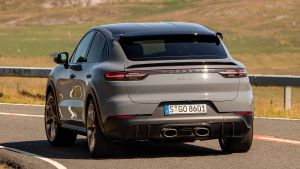
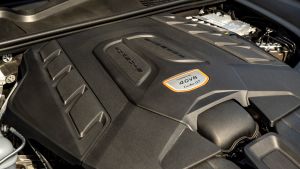
So here we are, then, with the Cayenne Turbo GT. Available only in four-seat form, and only with the Cayenne Coupe body style, this new variant is designed to hit back at the likes of the Lamborghini Urus. So Porsche’s 4.0-litre V8 engine has been retuned again to free up 631bhp and 850Nm of torque - substantial gains of 89bhp and 50Nm over the previous combustion-engined benchmark in the range, the ‘regular’ Cayenne Turbo.
It’s worth pointing out at this stage - because your friendly Porsche sales assistant is bound to - that the engine in the Turbo GT is based on the Turbo, designed in Weissach and assembled in Zuffenhausen. Porsche is keen to put some space between this motor and the V8s that you’ll find in the Urus or even some Audis.
Either way, the changes are detailed and substantial, with modifications to the internals, the turbo, the air intake and the cooling. The turbo produces around 1.6 bar of boost, an increase of just 0.1 bar over the Turbo. Maximum power is produced at 6,000rpm - the same as in the Turbo - while its substantial maximum torque figure is available between 2,300rpm and 4,500rpm.
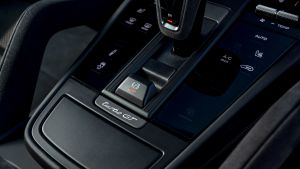
Four-wheel drive is standard, naturally, along with an eight-speed automatic gearbox that’s been recalibrated for quicker shifts. As a result, 0-60mph comes up in just 3.1 seconds - and you’ll max out at 186mph.
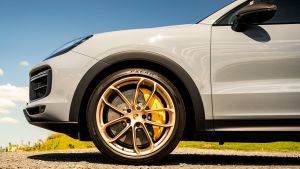
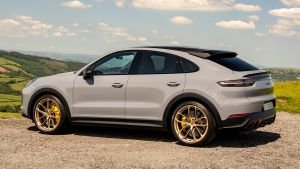
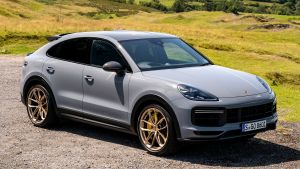
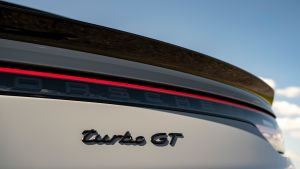
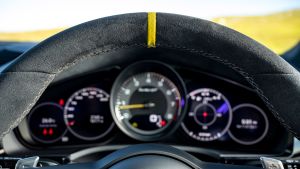
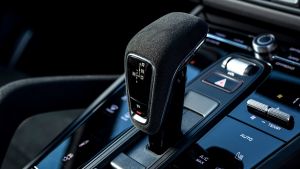
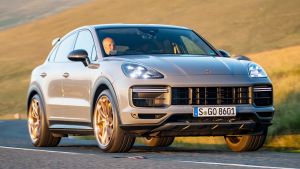
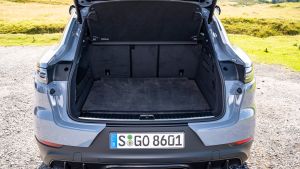
Porsche Cayenne Coupe Turbo GT - rear corneringPorsche Cayenne Coupe Turbo GT - wheelPorsche Cayenne Coupe Turbo GT - rear staticPorsche Cayenne Coupe Turbo GT - front staticPorsche Cayenne Coupe Turbo GT - rear badgePorsche Cayenne Coupe Turbo GT - dialsPorsche Cayenne Coupe Turbo GT - transmissionPorsche Cayenne Coupe Turbo GT - front corneringPorsche Cayenne Coupe Turbo GT - bootPorsche Cayenne Coupe Turbo GT - rear seatsPorsche Cayenne Coupe Turbo GT - full frontPorsche Cayenne Coupe Turbo GT - frontPorsche Cayenne Coupe Turbo GT - exhaustsPorsche Cayenne Coupe Turbo GT - seatsPorsche Cayenne Coupe Turbo GT - centre consolePorsche Cayenne Coupe Turbo GT - enginePorsche Cayenne Coupe Turbo GT - rearPorsche Cayenne Coupe Turbo GT - steering wheel controlsPorsche Cayenne Coupe Turbo GT - seat detailPorsche Cayenne Coupe Turbo GT - dash
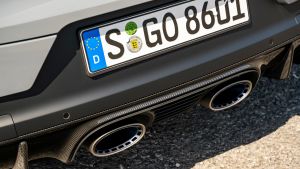
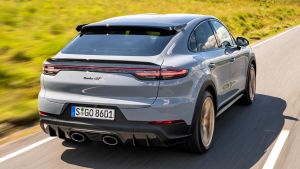
The car also promises a more engaging sound, thanks to a new titanium sports exhaust that has twin central-exit tailpipes but does without a centre silencer. This move also saves a full 18kgs; indeed, Porsche claims that this is the most agile Cayenne in the line-up, with retuned adaptive air suspension and a ride height lowered by 17mm compared with the regular Coupe Turbo. It’s even 7mm lower than the GTS, supposedly the most handling-focused edition in the line-up.
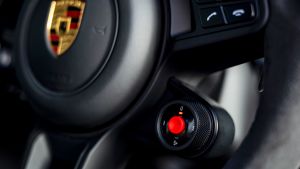
The suspension is 10 per cent stiffer than the Turbo’s when you’re in normal mode, and the gap widens to 15 per cent if you use the steering wheel-mounted rotary switch to move all the way into Sport Plus. The rear-axle steering has been reprofiled, as have the power steering, the Dynamic Chassis Control and the Torque Vectoring.
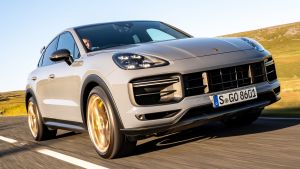
You basically get the regular Cayenne Coupe Turbo’s full gamut of chassis options as standard, so 22-inch wheels are included, along with the active anti-roll system and ceramic-composite brakes.
The price for all of this is £143,910 - although this being a Porsche, there remains the scope for that to go higher still once you start playing with options. Even so, as a starting point it is almost £20k cheaper than the Urus.
On the road, Normal mode feels like that typically well-judged everyday setting; the transmission makes smooth, almost lazy shifts, encouraging you to lollop along on a wave of low-down torque. The V8 burbles as it maintains a motorway cruise at what seems like little more than idle (it’s actually around 1,500rpm).
Request extra performance in this setting and you’re unlikely to be disappointed, though the immediate response may take a little getting used to. There is definitely the briefest of delays as the motor spools up - let’s call it a moment required for the system to realise you’re demanding a change in approach.
Flicking the switch into Sport reduces this mechanical thought process almost to the point where it disappears completely. The engine doesn’t really feel like it truly comes alive until 3,000rpm, but then all hell breaks loose. Bear in mind that you will already be travelling at a considerable rate of knots by this point, and you’re in something weighing more than 2.3 tonnes, and you get an idea of just how impressive the shove in the kidneys is. The mid-range punch is ludicrous, really (50-75mph takes just 2.2 seconds).
Porsche Cayenne Coupe Turbo GT - rear corneringPorsche Cayenne Coupe Turbo GT - wheelPorsche Cayenne Coupe Turbo GT - rear staticPorsche Cayenne Coupe Turbo GT - front staticPorsche Cayenne Coupe Turbo GT - rear badgePorsche Cayenne Coupe Turbo GT - dialsPorsche Cayenne Coupe Turbo GT - transmissionPorsche Cayenne Coupe Turbo GT - front corneringPorsche Cayenne Coupe Turbo GT - bootPorsche Cayenne Coupe Turbo GT - rear seatsPorsche Cayenne Coupe Turbo GT - full frontPorsche Cayenne Coupe Turbo GT - frontPorsche Cayenne Coupe Turbo GT - exhaustsPorsche Cayenne Coupe Turbo GT - seatsPorsche Cayenne Coupe Turbo GT - centre consolePorsche Cayenne Coupe Turbo GT - enginePorsche Cayenne Coupe Turbo GT - rearPorsche Cayenne Coupe Turbo GT - steering wheel controlsPorsche Cayenne Coupe Turbo GT - seat detailPorsche Cayenne Coupe Turbo GT - dash
If you want an homage to how great a combustion engine’s performance can be, then, it’s right here. It’s accompanied by a solid soundtrack, too, although it’s more of a thudding V8 than a shrill scream or even a NASCAR roar. You do get pops and crackles on downshifts, but in this respect, the engine definitely feels derived from what’s gone before in the Cayenne; don’t expect a radical rethink on character.
The same can be said for the chassis, thankfully, because the GT is agile - a match, we’d say, for the Cayenne GTS in its willingness to be chucked around. The steering is sufficiently quick for it to take a little getting used to; but once you’re settled, you’ll relish the impressive front-end grip and direct response, then begin to exploit huge levels of lateral grip. Sheer width and UK roads will get in your way long before the limits of the chassis or the intoxicating powertrain, in fact.
Body control - always a Cayenne forte - is exemplary, and the trade-off is a ride which is only a smidgen on the busy side in regular use. You’ll know you’re in one of the more focused variants, let’s say - without ever really feeling like you’re paying a penalty in comfort as a result.
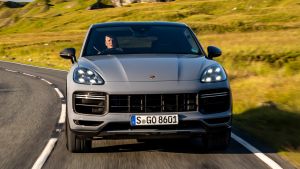
The Turbo GT does a good job of being subtle about its range superiority; wheels aside, it’s hard to tell much of a difference externally from the regular Cayenne Coupe. There’s a slightly enhanced body kit with carbon-fibre trim, plus a 25mm larger deployable rear spoiler that helps to generate up to 40kg more downforce at high speeds. Those who need to know will know, presumably.
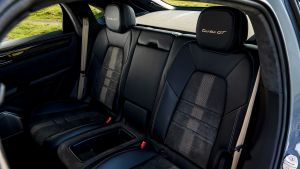
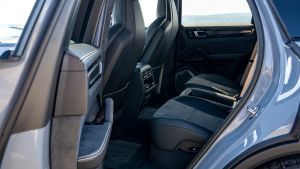
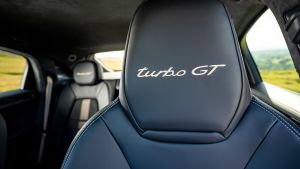
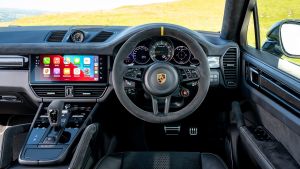
Inside, you get extra Alcantara trim, electrically adjustable sports seats up front and a pair of bucket seats in the rear - all of them carrying Turbo GT branding, naturally. Oh, and the infotainment system is now based on Porsche Communication Management 6.0 - which is a fancy way of saying that Porsche has finally got round to including Android Auto as well as Apple CarPlay.
We’ve no complaints about the system, though - nor the interior itself, which is a properly upmarket mix of fine materials and exemplary build quality. It’s a little odd, perhaps, to be restricted to just two seats in the rear. But much like the car itself, that’s probably a reflection of where the high-performance SUV market is these days.
In some respects, though, we do wonder how ultimately relevant the Turbo GT is in a country where lots of quieter roads are narrow, and where motorways still have a 70mph speed limit. We doubt that it would crush a GTS for pace on a cross-country thrash, for example, despite having a considerable power and torque advantage.